Create C4 Component Diagram Using the Plugin API
A C4 Component Diagram is the third level of the C4 Model – detailing the internal structure of a single container by outlining its key components, their roles, and how interact. It sits between the border Container Diagram and the more detail Code/Class level. In Visual Paradigm, you can create the C4 Component Diagram directly from the diagram editor or through the Plugin API. This article explains how to generate it programmatically using the Plugin API.
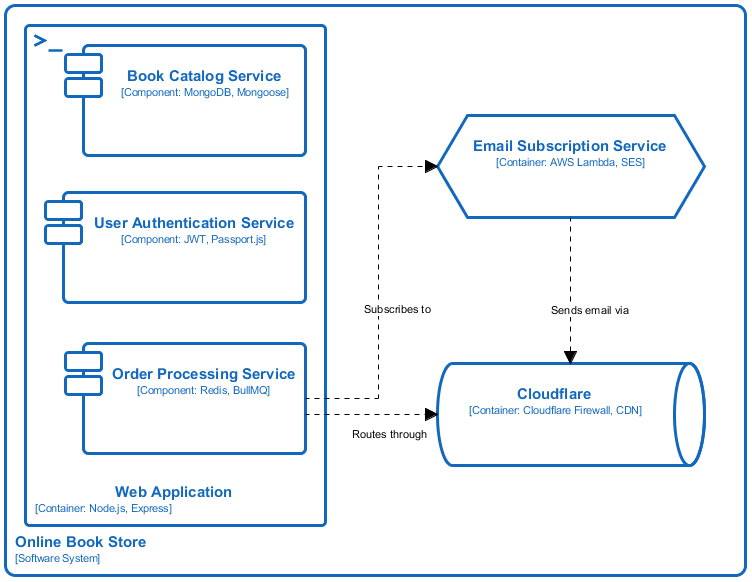
The C4 Component Diagram will be created by the plugin
Create C4 Container Diagram Using the Plugin API
A C4 Container Diagram is the second level of the C4 Model – a popular way to visualize software architecture. If the System Context Diagram shows the big picture, the Container Diagram zooms in one level deeper. In Visual Paradigm, you can create the C4 Container Diagram directly from the diagram editor or through the Plugin API. This article explains how to generate it programmatically using the Plugin API.
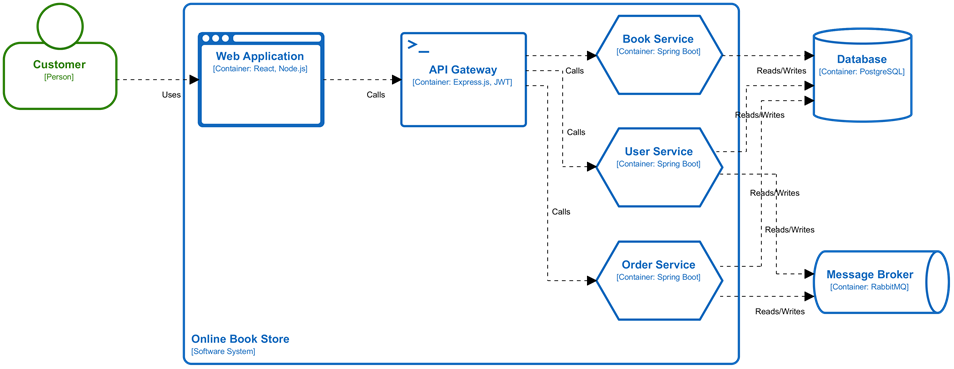
The C4 Container Diagram will be created by the plugin
Create a C4 System Context Diagram Using the Plugin API
A C4 System Context Diagram is the top-level view in the C4 Model – a lightweight, modern approach to visualizing software architecture. In Visual Paradigm, you can create this diagram directly from the diagram editor or through the Plugin API. This article explains how to generate a C4 System Context Diagram programmatically using the Plugin API.
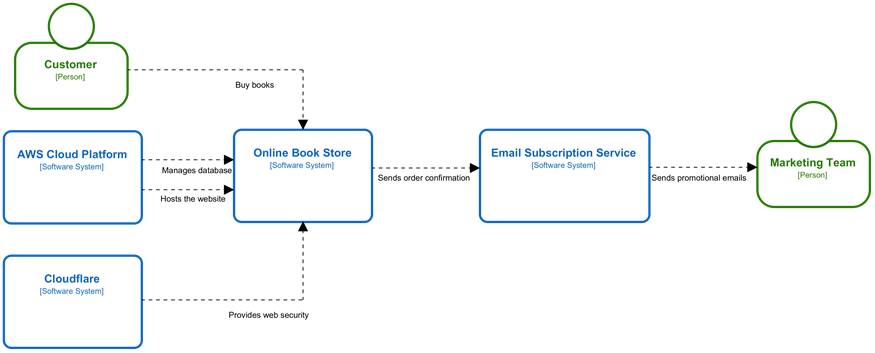
The C4 System Context Diagram will be created by the plugin
How to Find Out Your Workspace ID
The Visual Paradigm Online workspace ID is a unique identifier assigned to your VP Online workspace, used to connect Visual Paradigm Desktop with your online repository. If you already joined to Visual Paradigm Online, either signup by yourself, or invited by your team members, you can use the following way to locate the ID of your workspace.
Kick Start on Using AI Features in Visual Paradigm Desktop
Visual Paradigm Desktop has officially introduced AI-powered features, bringing intelligent assistance directly into your modelling and design environment. With this enhancement, users can now generate diagrams with the support of AI making the platform smarter and more efficient than ever before.
To take advantage of these new capabilities, users need to ensure they are running the latest version of Visual Paradigm Desktop and have access to the AI service via Visual Paradigm Online. Once enabled, the AI features integrate seamlessly into your Visual Paradigm Desktop, ready to assist with modelling.
This article will walk you through the essential requirements for using it, and the steps you need to follow to activate and start benefiting from these features in your daily work.
Automating Jira Backlog Creation with Agilien
Agilien is an innovative AI-powered assistant designed to simplify one of the most time‑consuming tasks in project management: building a comprehensive Jira backlog. Instead of manually drafting dozens of epics, stories, and tasks, Agilien allows you to start with just the essentials – your project’s domain, context, and goals. From this minimal input, the tool automatically generates a structured backlog that reflects your project’s objectives and priorities.
How to enable QueryBase
Visual Paradigm QueryBase is a web-based tool that enables users to explore, search, and analyze model data from Visual Paradigm projects stored in the cloud. It provides an intuitive interface for querying across various diagram types – including UML, BPMN, ArchiMate, ERD, and more – without needing to open the desktop modeling environment. Designed for both technical and non-technical stakeholders, QueryBase allows users to trace relationships, inspect model structures, and validate design consistency directly from a browser. Its real-time synchronization with Visual Paradigm Online ensures that users always access the most current version of their projects, making it ideal for collaborative review, stakeholder engagement, and quality assurance. To enable QueryBase in your repository:
Atlassian Jira Integration
Starting from version 17.3 build 20251021, Visual Paradigm supports integration with Atlassian Jira. This enhancement enables users to create issues and post comments directly to Jira from within Visual Paradigm. In this article, we’ll walk you through the steps to set up and use this integration effectively.
How to set icon to stereotype via plugin
Visual Paradigm allows user to using custom graphic to present stereotypes. Besides using GUI, this can also being configured using Plugin API. In this article you will learn how to configure stereotype icon using Plugin.
How to link your Visual Paradigm Desktop license to Visual Paradigm Online
By linking your Visual Paradigm Desktop license to Visual Paradigm Online, you gain access to additional cloud-based features such as AI-powered tools, online diagramming, and version-controlled repositories. This article will guide you through the steps to connect your Desktop license with your Visual Paradigm Online account.